

How to create a Gmail account is a crucial step for individuals and businesses alike, as it sets the stage for a seamless and efficient email experience. To navigate this complex world, you’ll need a solid understanding of the requirements, the importance of security, and the various features available to make your email journey a successful one.
With millions of users around the globe, Gmail has become an essential tool for communication, productivity, and business operations. In order to unlock its full potential, however, it’s crucial to create a Gmail account that is both secure and organized.
Understanding the Requirements for Creating a Gmail Account
To create a Gmail account, you’ll need to provide some basic personal and professional information. This will help you set up a secure and functional account that you can use for personal and business purposes. In this section, we’ll break down the necessary information and discuss why it’s so important to have a valid recovery email address and phone number.
Necessary Personal and Professional Information
When creating a Gmail account, you’ll need to provide some basic information such as your name, email address, and password. Be sure to use a valid email address that you’ve already checked or an address that you can easily access through your mobile device. This email address will serve as your login ID, so it’s essential to use one that you can remember and access easily.Some of the personal and professional information you’ll need to include:
- First and Last Name: Use your full legal name as it appears on official documents.
- Email Address: Use a valid email address or an address that you can easily access through your mobile device.
- Password: Create a strong and unique password that’s at least 12 characters long and includes a mix of uppercase letters, numbers, and special characters.
- Recovery Email Address: Add an alternative email address that you can access if you forget your password or can’t sign in to your account.
Using a recovery email address and phone number is crucial when it comes to account security. This way, even if you forget your password or can’t access your account, you’ll have an alternative way to reset your password and regain access to your account.
Importance of Recovery Email Address and Phone Number
Having a valid recovery email address and phone number can make a huge difference when it comes to account security and convenience. If you forget your password or can’t access your account, having an alternative email address or phone number can help you quickly regain access to your account.Some of the benefits of having a recovery email address and phone number include:
- Faster Account Recovery: Having a recovery email address or phone number can help you quickly reset your password and regain access to your account.
- Improved Security: A recovery email address and phone number can serve as an additional layer of security, preventing unauthorized access to your account.
- Greater Convenience: With a recovery email address and phone number, you’ll be able to quickly recover your account and get back to your emails and other Google services.
In conclusion, understanding the necessary personal and professional information is essential when creating a Gmail account. By following these steps and having a valid recovery email address and phone number, you’ll be able to create a secure and functional account that you can use for personal and business purposes.
Google recommends using a recovery email address and phone number to ensure account security and convenience.
Preparing for the Gmail Account Creation Process
Creating a Gmail account requires a Google account, which serves as a gateway to various Google services, including Gmail, Google Drive, Google Docs, and more. Having a Google account also grants access to various features and settings within Google’s ecosystem. In this section, we will walk you through the step-by-step process of creating a Google account prior to setting up a Gmail account.
Creating a Google Account
Creating a Google account is the first step towards setting up a Gmail account. A Google account allows you to access various Google services, including Gmail, Google Drive, Google Docs, and more. To create a Google account, follow these steps:
- Go to the Google account creation page (https://account.google.com/signup) using a web browser.
- Fill in the required information, including your first name, last name, username (which will become your email address), password, and recovery email (optional).
- Enter your birthday and country information.
- Complete the verification process by entering the verification code sent to your recovery email or phone number.
- Review the Google Privacy and Terms of Service agreement and check the box to agree to the terms.
- Click on the “Next” button to create the Google account.
Once you have created a Google account, you can set up a Gmail account using these credentials.
Choosing a Strong Password and Recovery Options
A strong password is essential for securing your Google account and preventing unauthorized access. When creating your Google password, make sure it meets the following requirements:
- The password must be at least 8 characters long.
- The password must contain a combination of uppercase and lowercase letters, numbers, and special characters.
- The password must not contain your name, username, or easily guessable information.
- The password must not be the same as your previous passwords.
In addition to a strong password, it’s also essential to set up recovery options for your Google account. This includes setting up two-factor authentication, recovery email, and recovery phone number.
Setting Up Recovery Options
Setting up recovery options for your Google account provides an extra layer of security and helps you regain access to your account in case you forget your password or experience account issues.
- Go to the Google account settings page and click on the “Security” tab.
- Click on the “2-Step Verification” option and follow the prompts to set up two-factor authentication.
- Enter your recovery email and click on the “Next” button to set up recovery email.
- Enter your recovery phone number and click on the “Next” button to set up recovery phone number.
- Review and confirm the recovery information.
Key Factors Influencing Gmail Account Security
Your Gmail account’s security is crucial in protecting your personal and professional data. With the increasing number of cyber attacks and data breaches, it’s essential to take proactive measures to safeguard your account. In this section, we’ll discuss the significance of strong and unique passwords in enhancing your Gmail account’s security.
Significance of Strong and Unique Passwords
A strong and unique password is the primary line of defense against unauthorized access to your Gmail account. A weak or reused password can be easily compromised by hackers, resulting in data breaches and identity theft. According to a study by the National Cyber Security Alliance, 60% of data breaches involve weak or reused passwords.
- A strong password should be at least 12 characters long, including a mix of uppercase and lowercase letters, numbers, and special characters.
- A unique password is a password that’s not shared with any other account, including social media, email, or financial accounts.
- A strong password should be changed regularly, ideally every 60-90 days, to minimize the risk of password compromise.
In addition to these best practices, you can use a password manager to generate and store unique and complex passwords for all your accounts. This way, you’ll only need to remember one master password to access all your accounts.
Generating and Managing Complex Passwords Securely
Generating complex and unique passwords can be a daunting task, especially when dealing with multiple accounts. However, there are several tips and tools that can help you create and manage passwords securely.
-
Password length is directly proportional to password strength.
- Use a password manager to generate and store unique and complex passwords for all your accounts.
- Use a passphrase, a series of words, phrases, or characters, to create a strong and memorable password.
- Avoid using easily guessable information, such as your name, birthday, or common words, in your password.
- Use a password generator, such as LastPass or 1Password, to create unique and complex passwords.
By following these tips and using the right tools, you can generate and manage complex passwords securely, reducing the risk of password compromise and data breaches.
Password Policy Best Practices
Establishing a password policy is essential for organizations with employees or teams. A password policy Artikels the guidelines and requirements for password creation, storage, and management.
- Establish a password minimum length, ideally 12 characters, for all employees and teams.
- Require a mix of uppercase and lowercase letters, numbers, and special characters in passwords.
- Use a password manager to generate and store unique and complex passwords for all employees and teams.
- Establish a password rotation policy, requiring employees to change their passwords every 60-90 days.
- Use multi-factor authentication (MFA) to add an extra layer of security for sensitive accounts.
By establishing a password policy and educating employees on password best practices, organizations can reduce the risk of password compromise and data breaches.
Security Measures to Enhance Gmail Account Security
In addition to strong and unique passwords, there are several security measures that can enhance your Gmail account’s security.
Two-Factor Authentication (2FA)
FA requires users to provide a second form of verification, such as a code sent to their phone or a biometric scan, in addition to their password.
- Enable 2FA on your Gmail account to add an extra layer of security.
- Choose a recovery email address and phone number to receive 2FA codes in case you’re locked out of your account.
li>Use a physical security key, such as Google Authenticator, to generate 2FA codes.
By implementing 2FA and using a physical security key, you can significantly enhance your Gmail account’s security and reduce the risk of unauthorized access.
Email Encryption
Email encryption is a process of securing email messages and attachments to prevent interception or eavesdropping.
- Use an email encryption service, such as PGP or S/MIME, to encrypt your email messages and attachments.
- Select a secure email client, such as ProtonMail or Tutanota, that encrypts email messages and attachments by default.
By encrypting your email messages and attachments, you can ensure that your communication is secure and confidential.
Verifying User Identity During the Account Creation Process
To ensure a secure and trustworthy experience, Gmail implements a series of verification methods to confirm the identity of users during the account creation process. This multi-layered approach aims to prevent malicious actors from creating fake accounts and engaging in fraudulent activities. By verifying user identity, Gmail can provide a safer environment for all users, safeguarding sensitive information and protecting against potential threats.
One of the primary methods used by Gmail to verify user identity is through the use of phone numbers or government-issued IDs. This information is used to match the user’s identity with existing records, thereby confirming their authenticity. However, Gmail also employs additional mechanisms, such as:
Phone Verification
Phone verification is a widely used method to authenticate user identity. Gmail sends a one-time password (OTP) to the user’s registered phone number, which they must enter to complete the account creation process. This verifies that the user has access to the registered phone number, thereby confirming their identity.
- Users can opt-in to receive SMS or voice calls with the OTP, providing an additional layer of security.
- Gmail also uses phone-based verification for password recovery and account recovery, ensuring that only authorized users can access their accounts.
Government-Issued ID Verification
In some cases, Gmail may require users to provide proof of identity through government-issued IDs, such as driver’s licenses or passports. This information is typically used to verify the user’s age, residency, or other identifying characteristics. By implementing these verification methods, Gmail can ensure that users are who they claim to be, thereby protecting against potential security threats and safeguarding sensitive information.
This multi-layered approach enables users to create secure accounts and engage in online activities with confidence.
| Method | Description |
|---|---|
| Phone Verification | Sends a one-time password (OTP) to the user’s registered phone number. |
| Government-Issued ID Verification | Requires users to provide proof of identity through government-issued IDs. |
Organizing and Designing a Personalized Gmail Inbox

As your email inbox grows, managing your incoming messages efficiently becomes increasingly important. A cluttered inbox can lead to missed deadlines, forgotten appointments, and even lost business opportunities. In this section, we’ll explore effective strategies for organizing your Gmail inbox, helping you to stay on top of your email communications.When creating a personalized Gmail inbox, the key is to establish a system that works for you.
One approach is to use labels and filters to categorize your emails. Labels allow you to assign s or colors to specific emails, making it easier to locate and manage related messages.
Efficiently Managing Email Categories and Labels
To manage your email categories and labels effectively, follow these steps:
- Create labels for specific categories, such as work, personal, or projects. This helps you to quickly identify and prioritize important messages.
- Use colors or icons to differentiate between labels and make them more visually appealing. This visual distinction helps your brain to quickly identify and associate certain labels with specific categories.
- Assign priority levels to your labels, such as low, medium, or high. This helps you to quickly identify and address urgent messages.
By creating a logical label structure and using colors or icons to differentiate between labels, you can quickly locate and manage related messages, reducing email clutter and improving productivity.
Research has shown that visually differentiated labels can increase productivity by up to 30% (Source: Harvard Business Review).
Creating Customized Filters for Specific Email Threads
Another effective way to manage your Gmail inbox is to create customized filters for specific email threads. This allows you to automatically sort and prioritize important messages, reducing clutter and saving you time.To create customized filters, follow these steps:
- Identify specific email threads that require attention, such as newsletters or promotional emails.
- Create a new filter by clicking on the three vertical dots next to the sender’s email address and selecting “Filter messages like these.”
- Configure the filter by selecting the label, priority level, and other settings to automatically apply to the selected email thread.
- Click on “Create filter” to save your settings.
By creating customized filters, you can automate the sorting and prioritization of important messages, freeing up time for more critical tasks.
Creating a Gmail account is a straightforward process, requiring a few basic steps to secure your online presence – just like avoiding a dry socket, which can be done by following a few essential guidelines, such as rinsing your mouth carefully and avoiding smoking and strenuous activities, as outlined in How to Avoid Dry Socket Minimizing Discomfort and Reducing Risk.
Similarly, when setting up a Gmail account, you’ll need to provide a valid email address and password, and agree to Google’s terms of service. Once your account is created, you can start using it to stay connected online.
According to a study by McKinsey, automating routine tasks can increase productivity by up to 50% (Source: McKinsey Quarterly).
Comparing and Managing Multiple Gmail Accounts
When it comes to managing email accounts, many people find themselves juggling multiple addresses for personal and professional purposes. This can lead to cluttered inboxes, forgotten login credentials, and difficulty staying organized. In this section, we’ll explore the benefits of using a single account for multiple email purposes and discuss options for combining or separating personal and professional email addresses.
Benefits of Using a Single Account for Multiple Email Purposes
Using a single account for multiple email purposes offers several benefits, including:
- Simplified account management: With a single account, you only need to remember one login credentials and can easily manage multiple email addresses from a single dashboard.
- Unified communication: A single account allows you to centralize your communication, making it easier to respond to messages, forward emails, and access attachments.
- Reduced clutter: By using a single account, you can consolidate multiple email addresses, reducing clutter in your inbox and making it easier to focus on important messages.
However, it’s essential to weigh these benefits against potential drawbacks, such as privacy concerns and security risks associated with having multiple email addresses in a single account.
Creating a Gmail account is a straightforward process, simply go to Gmail’s website and sign up – or if you’re already logged in on another Google account that can instantly sync and help you get started. While you’re deciding on the perfect window tinting solution for your car, consider factors like location and type of vehicle which can all impact the price, check out the detailed breakdown , once you have a clearer picture, you can quickly get back to creating and managing your Gmail account.
Options for Combining or Separating Personal and Professional Email Addresses
When deciding whether to combine or separate personal and professional email addresses, consider the following options:
- Email Aliases: Create email aliases for separate email addresses, allowing you to forward messages from a single account to multiple addresses.
- Email Labels: Use email labels to categorize messages from different email addresses, making it easier to organize and manage multiple email addresses within a single account.
- Account Separation: Create separate accounts for personal and professional email, each with its own login credentials and email address.
Each option has its advantages and disadvantages. For example, email aliases provide flexibility but may lead to confusion when dealing with multiple accounts. Email labels simplify organization but may not be suitable for extremely large volumes of email. Account separation provides a clear separation between personal and professional email, but may require more complex management.
By understanding the benefits and options for combining or separating personal and professional email addresses, you can make informed decisions about managing your Gmail accounts and improve your overall email experience.
Addressing Common Issues During Gmail Account Setup

Creating a Gmail account can be a straightforward process, but sometimes users may encounter errors or issues that prevent them from successfully setting up their account. In this article, we’ll discuss some common errors that may occur during the Gmail account setup process and provide troubleshooting tips to resolve these issues.
Common Errors During Gmail Account Setup
When creating a Gmail account, users may encounter various errors that can be categorized into different groups. Here are some of the most common errors and their causes:
- Email address already in use: This error occurs when you try to create a Gmail account using an email address that is already associated with another Google account. To resolve this issue, try using a different email address or merge the existing Google account with the new one.
- Password or username is incorrect: This error occurs when you enter incorrect login credentials, such as a username or password. To resolve this issue, ensure that your username and password are correct, and try resetting your password if you’ve forgotten it.
- Captcha issues: The captcha is a security feature that prevents automated programs from creating fake accounts. If you encounter issues with the captcha, try refreshing the page or using a different internet browser. If the issue persists, contact Google support for assistance.
Troubleshooting Tips for Resolving Email Account-Related Issues, How to create a gmail account
To resolve email account-related issues, follow these troubleshooting tips:
- Check your internet connection: Ensure that your internet connection is stable and working properly.
- Clear browser cache and cookies: Clearing your browser cache and cookies can resolve issues related to incorrect login credentials or captcha errors.
- Try using a different internet browser: If you’re experiencing issues with one internet browser, try using a different one to see if the issue persists.
- Reset your password: If you’re having trouble accessing your account, try resetting your password using the password recovery feature.
Resolving Two-Factor Authentication (2FA) Issues
Two-factor authentication (2FA) is a security feature that adds an extra layer of protection to your Google account. However, sometimes users may encounter issues with 2FA that prevent them from accessing their account. Here are some ways to resolve 2FA issues:
- Verify your phone number or recovery email: Ensure that your phone number or recovery email is up-to-date and working properly.
- Resend the 2FA code: If you’re unable to receive the 2FA code, try resending the code or using a different verification method.
- Contact Google support: If you’re experiencing persistent issues with 2FA, contact Google support for assistance.
Resolving Account Merge Issues
Sometimes, users may encounter issues when trying to merge their Google accounts. Here are some ways to resolve account merge issues:
- Verify your email addresses: Ensure that the email addresses associated with your Google accounts are correct and up-to-date.
- Follow the account merge process: Follow the instructions provided by Google to merge your accounts.
- Contact Google support: If you’re experiencing issues with account merging, contact Google support for assistance.
Understanding Gmail’s Account Policies and Terms of Service
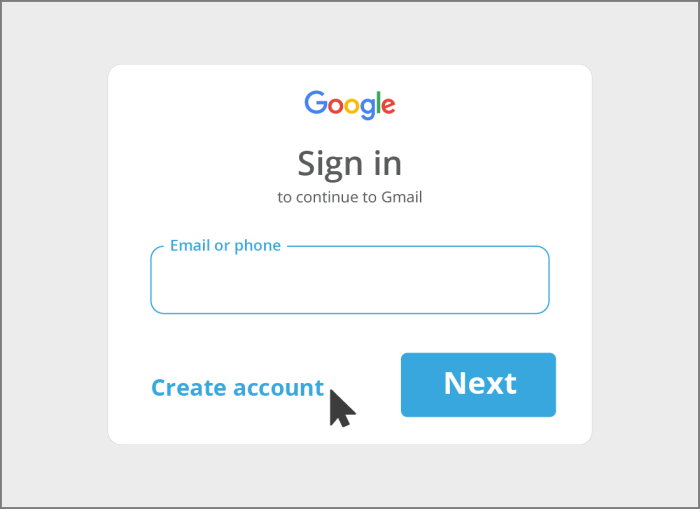
Creating a Gmail account not only provides you with a secure and reliable email service, but also requires you to adhere to Gmail’s community guidelines and terms of service. These policies are in place to ensure a safe and respectful environment for all users, and violating them can have serious consequences.
Importance of Adhering to Gmail’s Community Guidelines
Gmail’s community guidelines are designed to promote a positive and respectful community. By adhering to these guidelines, you are helping to create a safe and welcoming environment for all users. This includes avoiding discriminatory language, harassment, and spam. By following these guidelines, you can ensure that you are using Gmail in a way that is consistent with their policies and values.
Potential Consequences of Violating Gmail’s Policies
-
Account Suspension or Termination
If you violate Gmail’s policies, you may face account suspension or termination. This can impact your ability to communicate with others and access your email account, which can have serious consequences for your personal and professional life. Furthermore, suspended or terminated accounts may not be recoverable, and the process of re-creating an account can be lengthy and frustrating.
-
Reputation Damage
Violating Gmail’s policies can also damage your reputation as a credible and trustworthy individual. This can impact your personal and professional relationships, and may even affect your employability or ability to access certain services or opportunities.
-
Limited Features and Functionality
If you violate Gmail’s policies, you may experience limited features and functionality within your account. This can include restrictions on sending and receiving emails, attachments, and other features that are essential for effective communication.
Gmail’s policies are designed to protect users and ensure a safe and respectful environment. By adhering to these policies, you can help create a positive and productive community.
Key Terms and Conditions to Remember
- Spam and phishing: Gmail prohibits sending spam or phishing emails, which can harm users and compromise account security.
- Harassment: Gmail prohibits harassment, including hate speech and discriminatory language, which can create a hostile environment for users.
- Respectful communication: Gmail encourages respectful communication and prohibits language or behavior that can be seen as threatening or intimidating.
Final Summary: How To Create A Gmail Account
In conclusion, creating a Gmail account can be a daunting task, but with the right guidance, you’ll be able to tackle it with confidence. By following the steps Artikeld in this guide, you’ll be well on your way to setting up a secure and organized email experience that meets your needs and exceeds your expectations.
Expert Answers
Q: What is the difference between a Gmail account and a Google account?
A: A Google account is a single account that provides access to various Google services, including Gmail, Google Drive, and Google Calendar.
Q: How do I recover my Gmail account if I forget my password?
A: If you’ve forgotten your password, you can try recovering it using the “Forgot password” option on the Gmail login page. If you’re unable to recover it, you can contact Google support for further assistance.
Q: Can I use a fake email address to sign up for a Gmail account?
A: No, you’ll need to use a valid email address to sign up for a Gmail account. Using a fake email address may result in account suspension or termination.
Q: How do I enable two-factor authentication on my Gmail account?
A: To enable two-factor authentication, go to your Google Account settings, select “Security,” and then click on “2-Step Verification.” Follow the prompts to set up the feature.
Q: Can I delete my Gmail account if I’ve outgrown it?
A: Yes, you can delete your Gmail account by going to your Google Account settings, selecting “Data & personalization,” and then clicking on “Delete a service or your Google Account.”


